 Austria
 Belgium
 Bulgaria
 Croatia
 Czech Republic
 Denmark
 Estonia
 Finland
 France
 Germany
 Greece
 Hungary
 Ireland
 Italy
Italy
 Latvia
 Lithuania
 Luxembourg
 Netherlands
 Poland
 Portugal
 Romania
 Slovakia
 Slovenia
 Spain
Spain
 Sweden
Sea Buckthorn Processing: How to Make Juice with the TRE SPADE Easy Squeezy
2026. 10. 05.
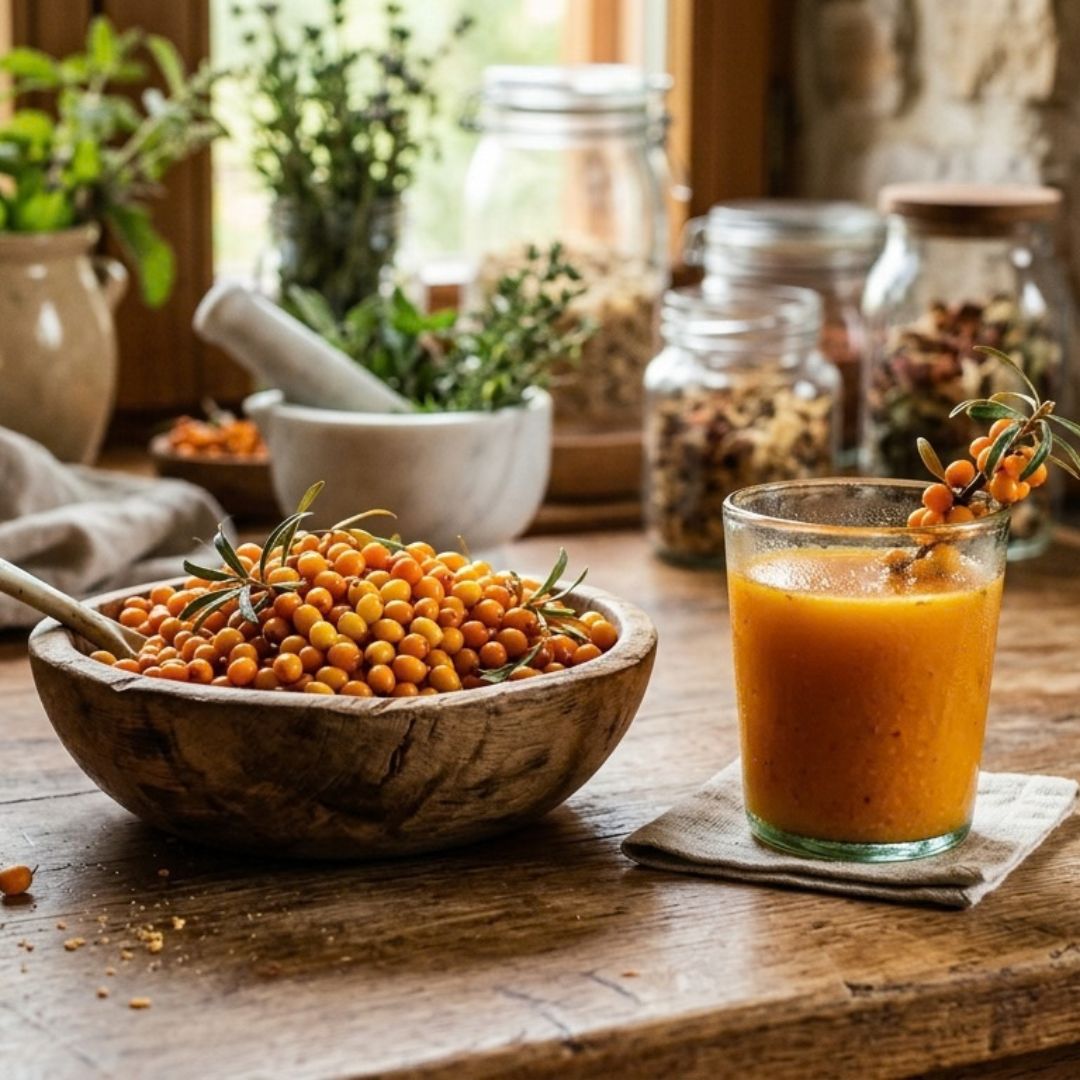
Where does sea buckthorn come from and what is it used for?
Common sea buckthorn (Hippophae rhamnoides) is a plant native to the cold and temperate regions of Eurasia. In Europe, it can be found in its natural habitats, including along riverbanks and in sandy areas, but nowadays it is also cultivated on a large scale in many countries.
The orange berries are valued for their unique nutritional composition. Sea buckthorn fruit is primarily used as food and as an ingredient in various processed products. It can be used to make juice, syrup, purée, jam and other fruit products, while oil can also be extracted from the seeds and fruit pulp.
Its flavour is characteristically sour and intense, which is why sea buckthorn juice is often combined with sweeter fruit juices.
Why is sea buckthorn valuable?
Sea buckthorn is not only a fruit with a distinctive, pleasantly sour flavour, but also contains a variety of valuable nutrients. It is particularly rich in vitamin C, but also contains vitamin E, carotenoids – including beta-carotene –, as well as polyphenols and flavonoids. The whole berry is also rich in fibre and pectin, while its minerals include potassium, calcium, magnesium, iron, zinc and manganese.
During pulping, some of the fibre and certain fat-soluble compounds remain in the fruit pulp and the solid material around the seeds, so the composition of the resulting juice differs from that of the whole berry. Sea buckthorn is therefore particularly interesting as a source of a variety of valuable nutrients and plant compounds, rather than because of any single "miraculous effect".
What is the 2026 sea buckthorn harvest like?
Sea buckthorn is typically harvested from late August through October, although the exact timing depends significantly on the variety, growing location and weather conditions in the given year.
2026 has also been an exceptionally dry year throughout Europe. This is an important factor for sea buckthorn as well. Although the plant is relatively drought-tolerant, water availability can affect berry size, juiciness and overall condition. Therefore, in 2026 there may be particularly significant differences between the yields of individual growing locations and plantations.
Before processing, it is therefore worth considering not only the ripeness, but also the size and juice content of the berries.
What is commonly used to pulp sea buckthorn?
For processing larger quantities of sea buckthorn, various fruit presses, pulping machines or centrifuge-type equipment are commonly used in industrial settings.
For smaller farms or home processing, however, a screw-type pulper can be a much simpler and more practical solution. With the appropriate screen, the fruit pulp and juice can be separated from the skins, seeds and larger solid particles.
The TRE SPADE Easy Squeezy comes with four stainless-steel screens with openings of 0.5 mm, 0.8 mm, 1.5 mm and 2 mm. The machine can be used to prepare juices and purées from a wide range of fruits and vegetables.
Pulping sea buckthorn with the italian TRE SPADE Easy Squeezy
When processing sea buckthorn, the choice of screen depends on the desired consistency of the final product as well as on the condition of the fruit being processed.
0.8 mm screen – a good all-round choice
If the aim is to produce a more liquid but still rich sea buckthorn juice, it is worth trying the 0.8 mm screen first.
This can be a particularly good choice when the berries are sufficiently ripe but not overripe and release their juice well.
0.5 mm screen – for a thicker, more purée-like result
If you want a thicker result with a higher fruit-pulp content, the 0.5 mm screen may be the better choice.
One of our customers used only the 0.5 mm screen for sea buckthorn. According to their experience, the machine processed the fruit in a single pass and produced an excellent result, while a second pass did not provide any significant additional yield.
The sea buckthorn seed is flat and elongated, roughly resembling a small plum stone. Its size means that larger screens could theoretically also be used, but depending on the desired consistency, the 0.5 or 0.8 mm screen may be the more practical choice.
What should you pay particular attention to when pulping sea buckthorn?
One characteristic of sea buckthorn is that it can be very juicy. Particularly with overripe berries, more intense splashing can be expected.
The machine comes with a splash guard, which naturally does its job in this situation as well, but berries with a high juice content may burst more forcefully under the pressure of the screw than other fruits.
One of our customers found a simple and effective solution: using an apron-like cover made from thicker plastic film to direct the splashes towards the collection container. The film was secured with two short pieces of insulating tape, helping to protect the surrounding area and clothing from sea buckthorn juice splashes.
Important: the plastic film is only an optional individual solution; make sure that it does not interfere in any way with the operation of the machine, its rotating parts or motor ventilation – a little technical common sense is useful here too.
Preparation: what should we do with the berries before pulping?
Sea buckthorn should be carefully sorted before processing. In particular, remove twigs, leaves and other plant debris.
The size of the berries is not necessarily a problem in itself, but before processing it is worth checking how ripe and juicy they are.
If an occasional small piece of fruit ends up in the juice coming out of the machine, the juice can be filtered further afterwards. If a particularly clear juice is desired, the more liquid fraction can be passed through a coarser and then a finer filter.
Quick guide: which screen should you choose?
- 0.8 mm: a good starting point for a more liquid but still rich sea buckthorn juice.
- 0.5 mm: for a thicker, more purée-like result with more fruit pulp.
- 1.5–2 mm: theoretically possible due to the relatively large seed size, but finer screens are generally more practical for sea buckthorn.
- Second pass: not necessarily required; practical experience shows that one pass through the 0.5 mm screen can already provide a very good result.
- Very ripe, very juicy berries: expect more splashing.
How should sea buckthorn juice be preserved?
Freshly pulped sea buckthorn juice is not suitable for long-term storage at room temperature on its own. If you want to keep it for later, an appropriate preservation method is required.
Pasteurisation
One traditional method is heat treatment, i.e. pasteurisation. Juice filled into properly prepared and cleaned bottles or jars can be preserved through heat treatment.
However, the exact temperature and duration should always be determined according to the recipe, technology and packaging used. When preserving food, not only flavour and nutrient retention but also food safety are important considerations.
Freezing
For home use, freezing can be a very practical solution. The juice can also be frozen in smaller portions, so you only need to defrost as much as you need at a time.
Combining with other fruit juices
Due to its intense, sour flavour, sea buckthorn works particularly well when combined with other fruit juices. Apple, pear or orange juice, for example, can produce a more balanced and pleasant drink.
It is worth experimenting with smaller quantities first, as sea buckthorn has a very distinctive flavour: even a relatively small amount can noticeably change the taste of a fruit juice.
In summary
When processing sea buckthorn, the most important thing is to choose the screen according to the condition of the fruit and the desired final consistency.
The 0.8 mm screen can be a good all-round choice for a more liquid juice, while the 0.5 mm screen is recommended for a thicker, more purée-like result. Properly prepared berries can be processed very effectively in a single pass.
However, be prepared for more intense splashing when processing particularly ripe, juicy berries. With a little preparation and a suitable working environment, this can be easily managed.
Once the fresh sea buckthorn juice is ready, pasteurisation, freezing or combining it with other fruit juices are all good ways to enjoy the harvest not only fresh but also later.
We wish you successful processing and a great sea buckthorn season!
The Gammo Team
Most Popular Posts
Related products
TRE SPADE BT manual tomato squeezer
63,52 EUR(52,50 EUR + VAT)
TRE SPADE XL-ECO manual tomato squeezer
78,04 EUR(64,50 EUR + VAT)
TRE SPADE XL manual tomato squeezer
103,46 EUR(85,50 EUR + VAT)
GAMMO manual food mill with 5 inserts - 300mm
114,95 EUR(95,00 EUR + VAT)
TRE SPADE SpremiTo tomato squeezer INOX
274,06 EUR(226,50 EUR + VAT)
TRE SPADE EasySqueezy strainer with 4 sieves
326,70 EUR(270,00 EUR + VAT)
TRE SPADE BIG-2P Elegant tomato squeezer
377,52 EUR(312,00 EUR + VAT)