 Austria
 Belgium
 Bulgaria
 Croatia
 Czech Republic
 Denmark
 Estonia
 Finland
 France
 Germany
 Greece
 Hungary
 Ireland
 Italy
Italy
 Latvia
 Lithuania
 Luxembourg
 Netherlands
 Poland
 Portugal
 Romania
 Slovakia
 Slovenia
 Spain
Spain
 Sweden
Why Does Food Dry Out While Being Kept Warm? 7 Common Causes and Fixes
2026. 09. 18.
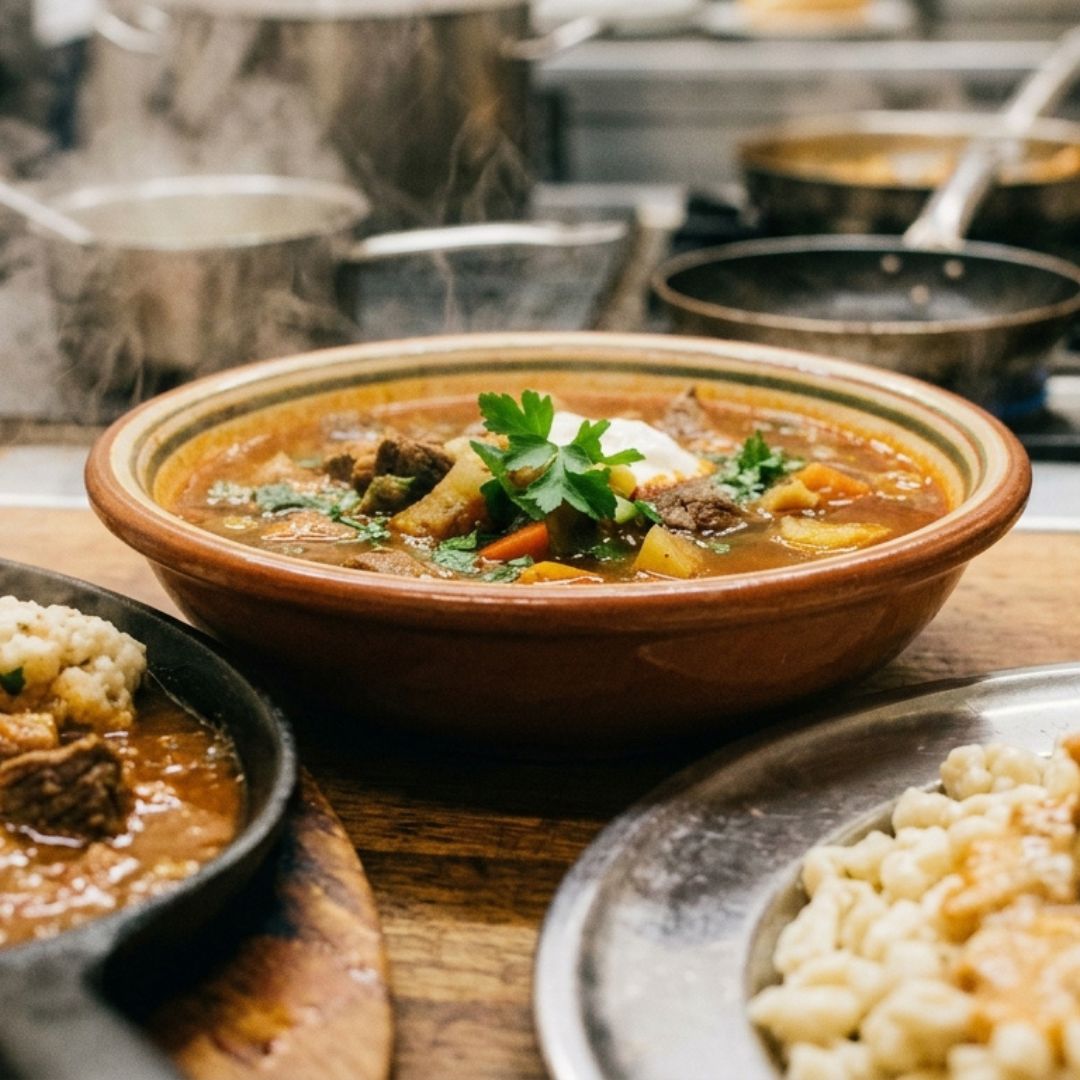
The purpose of keeping food warm is to make sure the dish stays at the right temperature and remains enjoyable until it's served. Yet it often happens that meat dries out, side dishes lose their texture, sauces thicken, and fried foods turn hard. What causes all this? In most cases, the problem isn't the warming itself, but too high a temperature, too long a holding time, the wrong container, or a poorly chosen unit. We've gathered the seven most common causes — and what you can do about each of them.
1. You're keeping the food at too high a temperature
One of the most common mistakes is setting the warming unit higher than necessary. Although it may seem logical that a higher temperature keeps food warmer more reliably, over time it can easily lead to drying out and a loss of texture.
What should you do instead?
Always use the setting that's right for the specific dish and unit, and follow the manufacturer's instructions. The goal isn't to make the food as hot as possible, but to keep it in the right conditions until it's served.
2. You're keeping it warm for too long
Even with the perfect setting, how long the food stays in the warmer matters. The longer it's exposed to heat, the greater the chance that its texture will change, that it will lose moisture, or that it will thicken. This can be especially noticeable with meat, rice and potato side dishes, and certain pasta dishes.
What should you do instead?
Plan your portions, and where possible, avoid preparing significantly more food at once than you actually need based on expected demand. Smaller, more frequently refreshed portions often give better results.
3. You're using the wrong container
When it comes to keeping food warm, the container itself matters too. A container that's too large, too shallow, or simply the wrong fit for the dish can leave a larger surface exposed, which increases moisture loss. That's why properly sized GN pans are especially practical in foodservice, since they can be used with a range of different warming units.
What should you do instead?
Choose a container size that matches the quantity and type of food. Don't use an unnecessarily large container if you're only holding a smaller amount.
4. You're keeping the food uncovered
Moisture escapes more easily from an open container, which can dry out the food over a shorter or longer period. This can be especially problematic for dishes that naturally contain a lot of moisture.
What should you do instead?
Whenever the type of dish and the way it's served allow it, use an appropriate cover. This can help reduce moisture loss and slow the decline in quality. It's important to note, however, that covering isn't ideal for every dish. With crispy foods, for example, the resulting steam can have the opposite effect and cause the desired texture to be lost.
5. You're keeping the food on too large a surface
The larger the exposed surface of the food, the greater the potential moisture loss. That's why a small amount of food kept in a large, shallow container often dries out faster than when a properly sized container is used.
What should you do instead?
Match the container size to the quantity, and avoid an unnecessarily large serving surface. If you offer several different dishes, properly sized GN pans can help with this too.
6. You're using the wrong warming method
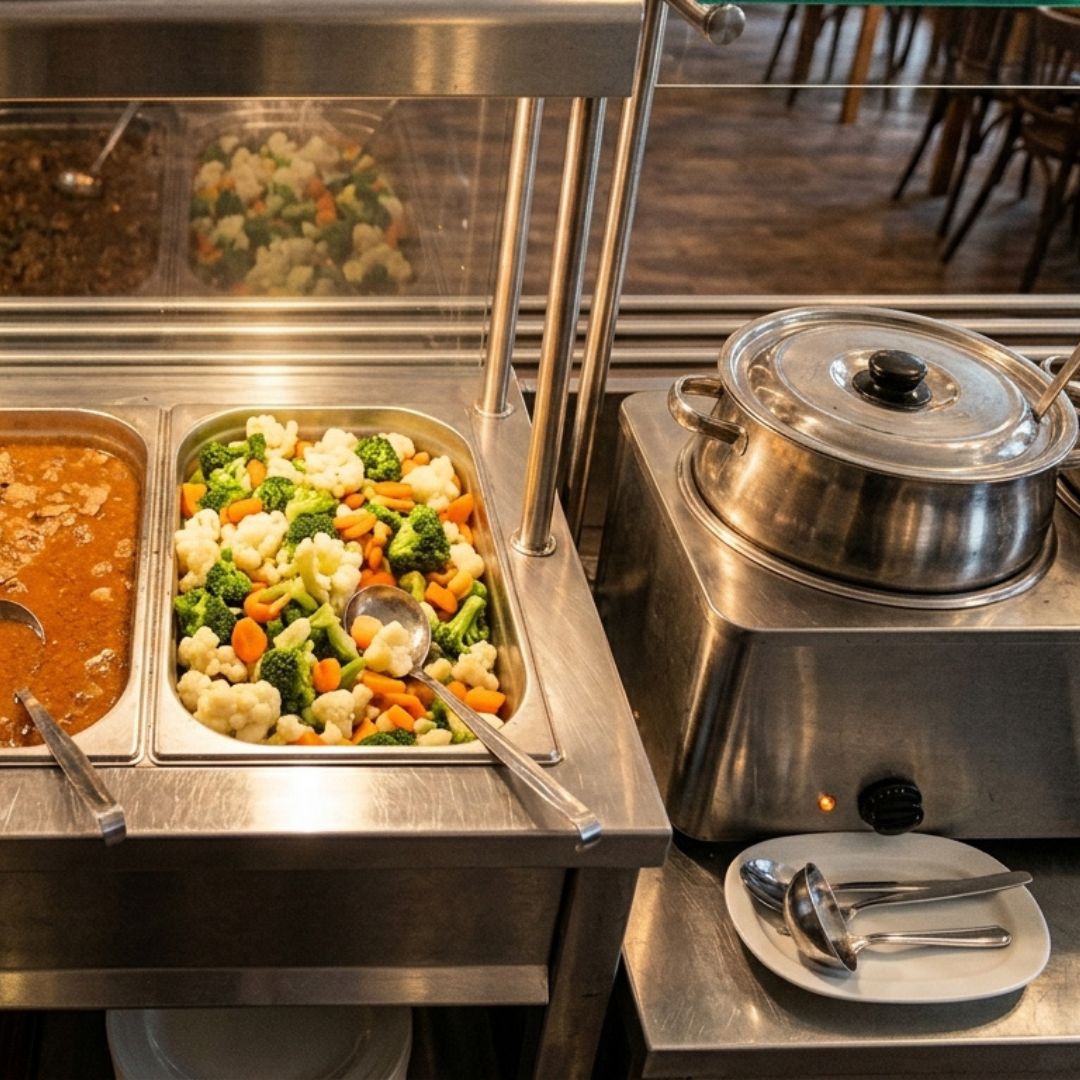
Not every dish calls for the same warming solution. A soup, a saucy ragout, a side dish and a crispy fried item all behave very differently under heat. A chafing dish can be practical for keeping several dishes warm at once, while a heated display case mainly offers a targeted solution for maintaining the temperature and presentation of food that's ready to serve.
What should you do instead?
Don't choose based solely on the unit's capacity. Think about what dishes you offer, in what quantity, and how often you need to replenish them.
7. You're not accounting for the dish's specific characteristics
Some foods are simply more sensitive to extended holding times. Crispy breading, for example, loses its crunch over time, meat can dry out, and starchy side dishes can change texture. In these cases, the problem isn't necessarily the equipment — the dish itself may simply not have been designed to wait, kept warm, for a long period before serving.
What should you do instead?
Treat preparation and serving as one connected process. For some dishes, refreshing in smaller batches is the better solution, while for others, the right cover, container or warming system can make the difference.
+1: How to keep food warm at home?
Keeping food warm isn't only important in foodservice. At home, it's common for lunch to be ready before everyone gets home at the same time, or for you to want everyone at a larger gathering to get a hot meal. Several simple solutions can help in a home setting.
- If you only need to keep food warm for a short time, your oven's low-temperature keep-warm function or a suitable warming setting can be practical. It's important, though, not to leave the food warm for an unnecessarily long time.
- For soups and sauces, a properly set hob or keeping the food warm in its pot can be a convenient solution. Here too, it's worth making sure the food doesn't keep simmering continuously, as this can affect its texture.
- For a larger family lunch or a gathering, heat-retaining dishes, thermal containers or serving dishes can also help the food hold its desired temperature for longer.
The key at home is the same: don't just focus on keeping the food warm — make sure it also reaches the table safely and in the best possible quality.
GAMMO tip
Good warming isn't simply about keeping food "warm". Temperature, time, the container, covering and the type of dish itself all combine to determine the result. If you regularly work with larger quantities — for example in a buffet, restaurant, hotel or catering setting — it's worth choosing your warming unit as part of the whole workflow. With a well-chosen solution, you can not only preserve food quality more easily, but also make serving and refilling smoother.
GAMMO's range includes several foodservice warming solutions. If you're not sure which one would be ideal for your kitchen, our colleagues are happy to help you choose the right unit for your volume and the dishes you serve.