 Austria
 Belgium
 Bulgaria
 Croatia
 Czech Republic
 Denmark
 Estonia
 Finland
 France
 Germany
 Greece
 Hungary
 Ireland
 Italy
Italy
 Latvia
 Lithuania
 Luxembourg
 Netherlands
 Poland
 Portugal
 Romania
 Slovakia
 Slovenia
 Spain
Spain
 Sweden
10 Things That Challenge a Commercial Kitchen at a Major Event
2026. 07. 28.
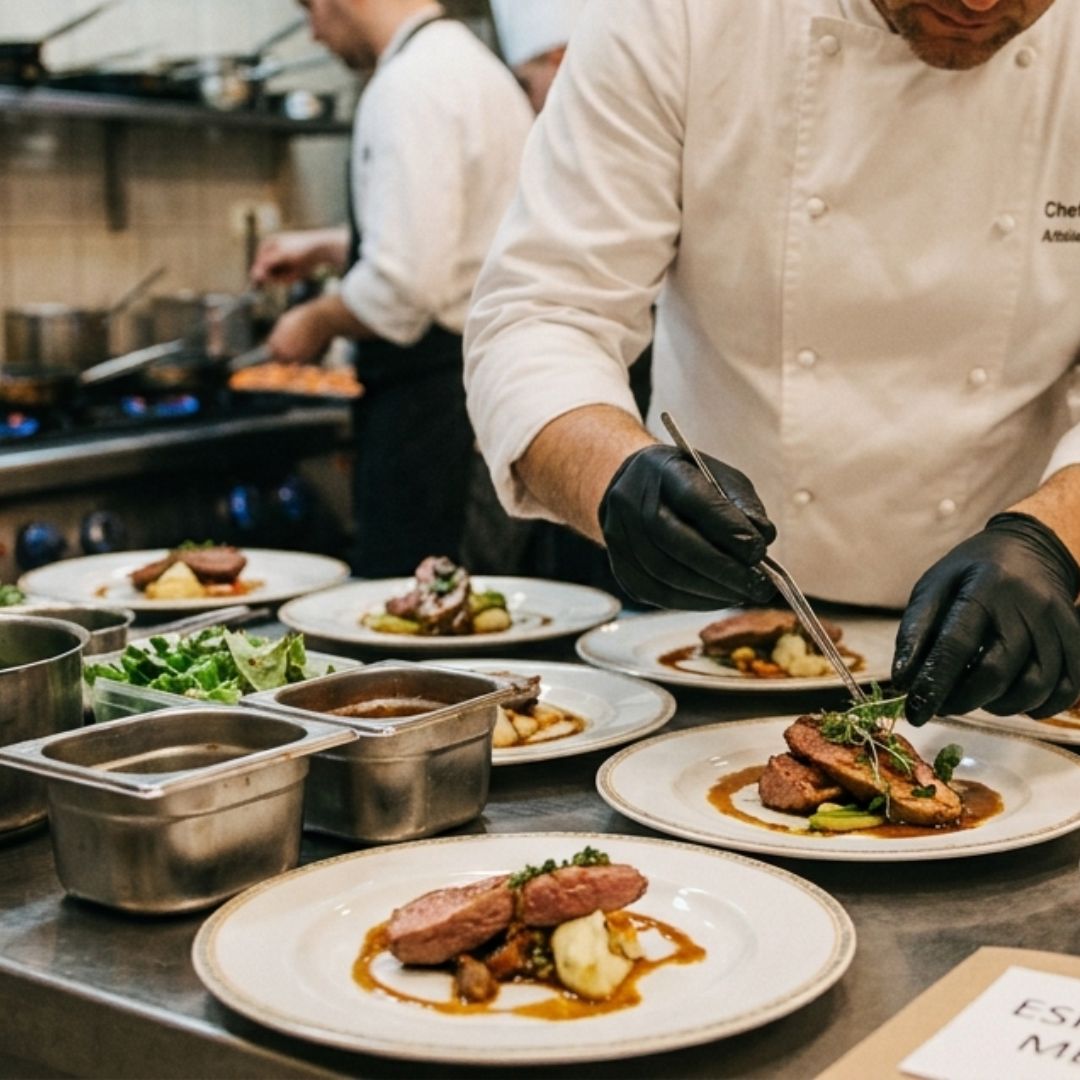
When a guest arrives at a wedding, festival, or major corporate event, the visuals usually greet them first. The beautiful decor, elegantly set tables, the music, the atmosphere – and of course the food, one of the most important parts of the whole experience. Fewer people, however, stop to think about what's happening behind the scenes at the same time.
While guests are comfortably chatting, raising a toast, or waiting for the next course, a completely different world is unfolding in the kitchen. Hundreds of portions are being prepared at once, every minute matters, servers arrive with precise timing to collect the dishes, and the cooks work within a tightly coordinated system. Good behind-the-scenes work stays invisible – and that may be the best feedback of all. Let's look at the situations that truly challenge a kitchen at a major event.
1. Everyone Wants to Eat at the Same Time
This is perhaps the eternal classic of event kitchens. On an average restaurant day, the kitchen works at a steady rhythm. Orders come in, dishes get made, then the next round arrives. A major event, however, dictates a completely different pace. At a wedding or corporate event, hundreds of plates often need to go out within just a few minutes – and every portion still has to match in quality.
This is where it really becomes clear how well the kitchen has been planned. If oven capacity is too low, if the cooking surface is too small, or if there isn't enough prep space, even the best team can end up in trouble. That's why professional combi steamer ovens and commercial ovens and ranges play such a key role in large-event kitchens. They can handle greater volume and also make the work far more predictable.
2. The First Portion Is Already on Its Way, the Last One Is Still Cooking
Guests often only see the food when it arrives at the table. What's less visible is the precise timing needed in the kitchen to make sure every dish reaches the guest at the right temperature and condition. At a major event, preparation itself isn't always the biggest challenge. Often, the truly difficult task is making sure the food keeps the quality the kitchen intended right up until the moment of serving. Freshly roasted meat, a crispy side, or a carefully prepared garnish can lose its appeal within minutes without the right holding setup.
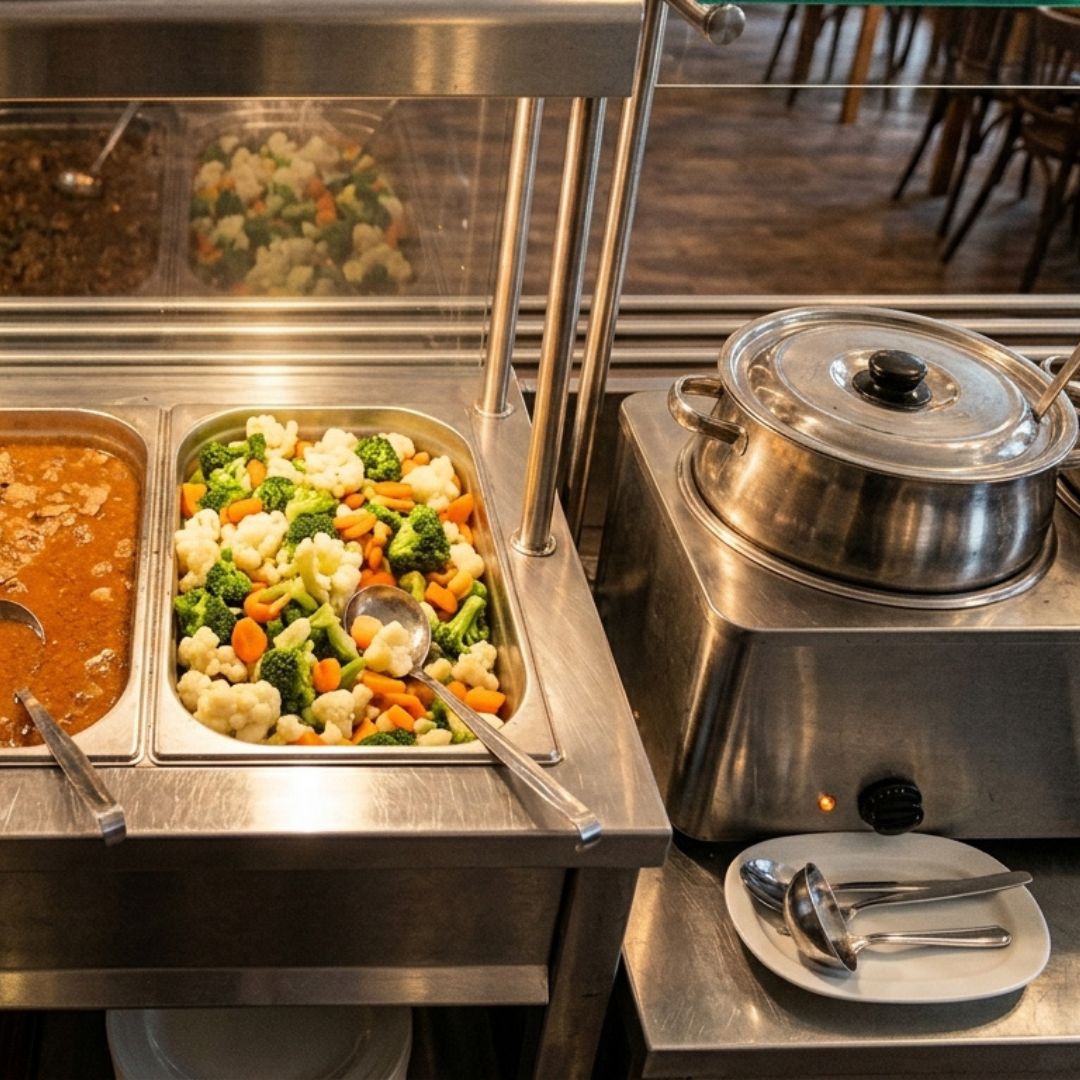
Heated holding cabinets, chafing dishes, as well as GN containers and systems help with exactly this, allowing food to wait for service in an organized way, under the right conditions. These are especially important at weddings and catering events, where multiple courses often follow one after another and the kitchen has to constantly balance preparation, holding, and plating.
3. Where Does All That Food Even Fit?
Ahead of an event for 300 guests, the kitchen fills up fast. Crates of vegetables arrive, kilograms of meat wait to be processed, desserts need their own space, not to mention the drinks. At a larger event, adequate cooling capacity isn't a matter of convenience. It's one of the foundations of safe storage and smooth preparation. The right commercial refrigerators, refrigerated prep tables, freezers, and other cooling equipment allow the team to work ahead and keep every ingredient in proper condition.
This becomes even more of a challenge during summer events. Higher temperatures, longer outdoor programs, and higher drink turnover all put continuous strain on cooling.
4. Vegetables Don't Slice Themselves
Preparation for a major event often begins days in advance. The kitchen team has kilograms of potatoes, onions, vegetables, or meat to process, and these tasks add up fast. Of course, everything can be done by hand – it's just a question of how much time it takes and how many people it takes. That's exactly why prep equipment plays such an important role in a professional kitchen. Vegetable slicers, food processors, cutter mixers, dough mixers, or even meat grinders don't take work away from the cooks – they help the team work faster and more efficiently.
5. The Line Just Keeps Getting Longer…
One of the biggest challenges at street food events, festivals, and outdoor events is fast service. A long line doesn't just test guests' patience – it puts pressure on the kitchen team too. Every second counts here: how quickly a batch of fries is ready, how many burgers fit on the grill at once, how fast the counter can keep up.
Properly sized deep fryers, contact grills, griddle plates, grills, and other street food equipment prove their worth exactly in situations like this.
6. Of Course the Ice Runs Out Right Now
Anyone who's worked a summer event has probably run into this. The sun is out, guests are arriving, the bar is buzzing, everyone wants cold drinks – and the ice machine just gave up. And naturally, it never happens at a calm moment. Ice, though, plays a much bigger role at an event than you'd think at first. It's needed for cocktails, soft drinks, chilling champagne and wine, and often for keeping various ingredients at the right temperature too. A properly sized ice machine, along with the right beverage coolers and cooling solutions, keep both the bar and the kitchen running smoothly.
It's especially worth thinking ahead for summer weddings, festivals, and outdoor events, since even a small detail like this can throw off the whole atmosphere of an event.
7. Equipment Has to Keep Up the Pace Too
A piece of kitchen equipment's real capability doesn't always show on an average day. Equipment can work perfectly at lower volumes, but an event for 300 guests is an entirely different challenge. Here, everything is under continuous use for hours: ovens, fridges, fryers, dishwashers. With professional commercial kitchen equipment, it's not just what it can do on paper that matters – it's also how reliable it is over the long haul. There's really no room for unexpected downtime in an event kitchen. A broken piece of equipment isn't just an inconvenience – it can throw off the entire workflow. That's exactly why it's important for hospitality businesses to choose equipment that's genuinely built for that kind of load.
8. And Then There's Still the Dishwashing…
By the time guests are enjoying dessert, the work in the kitchen is far from over. Hundreds of plates, glasses, utensils, GN containers, and kitchen tools are waiting to be cleaned. After a major event, dishwashing alone is a serious logistical task. A traditional dishwashing process can quickly become a bottleneck at this volume. If there isn't enough clean equipment, it affects the entire kitchen's operation.
Commercial dishwashers, glasswashers, and hood-type dishwashers are built for exactly this – to deliver a fast, efficient solution even under heavy load.
9. Few People, Many Tasks
One of hospitality's biggest challenges today is securing enough staff. At a major event, it's especially important that everyone can focus on their own task. If cooks have to spend too much time on simple, repetitive processes, it slows down the whole team in the long run.
10. Guests Notice None of This
This might be the highest praise an event kitchen can get. If all the guest sees is that the food is delicious, service is fast, and everything runs smoothly, then the team working behind the scenes did their job well. They don't see the hours of preparation, the precise timing, the constant coordination, or the equipment that supported the work throughout.
A good equipment lineup doesn't just mean faster work. It also helps the kitchen team work with more peace of mind, so guests remember just one thing: a truly great event. GAMMO's range includes a wide selection of professional commercial kitchen equipment that rises to the challenges of weddings, festivals, catering events, and larger gatherings alike. Explore our professional kitchen solutions and find the equipment that will make your next big event that much easier to pull off.