 Austria
 Belgium
 Bulgaria
 Croatia
 Czech Republic
 Denmark
 Estonia
 Finland
 France
 Germany
 Greece
 Hungary
 Ireland
 Italy
Italy
 Latvia
 Lithuania
 Luxembourg
 Netherlands
 Poland
 Portugal
 Romania
 Slovakia
 Slovenia
 Spain
Spain
 Sweden
Professional Vegetable Cutting Techniques: Discover Sammic's New Déli-cut System
2026. 06. 18.
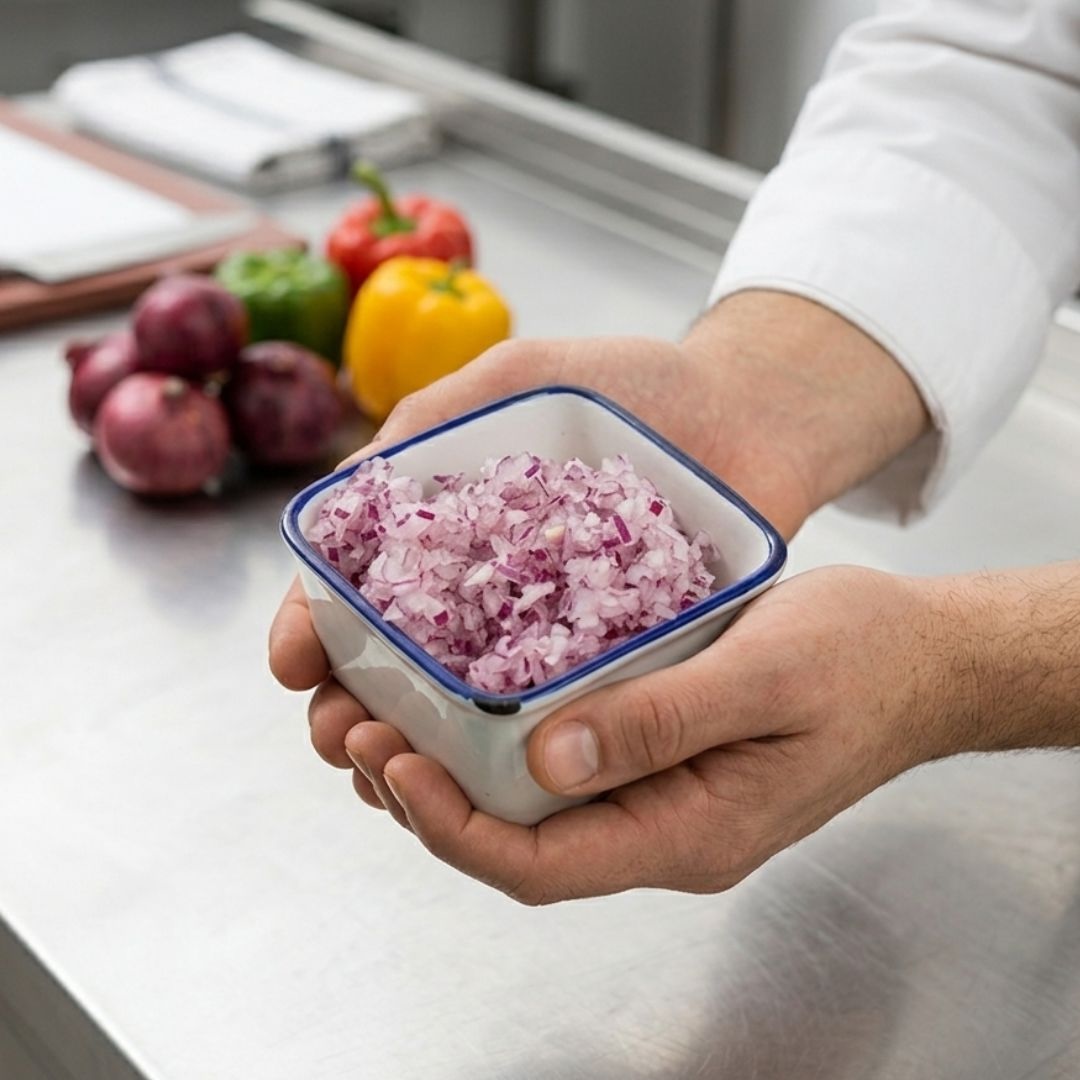
In professional food service, the right cutting technique is much more than a matter of presentation. Uniform vegetable pieces ensure even cooking, predictable preparation times, more efficient workflows, and consistent plating. This is why standardized cutting techniques remain an essential part of culinary education and commercial kitchen preparation.
Modern vegetable preparation machines are capable of much more than simple slicing and grating. They can also produce a wide range of classic cutting styles with exceptional precision. Recently, Sammic expanded its product range by introducing new cutting discs designed for the Déli-cut system, offering new possibilities for preparing salads, ready meals, and pre-processed vegetable mixes.
The Origins of Professional Vegetable Cutting Techniques
Most vegetable cutting techniques used around the world today originate from classical French cuisine. During the 19th and 20th centuries, French culinary education became the foundation of modern gastronomy, which is why many original French cutting terms are still considered international standards.
Terms such as julienne, brunoise, macédoine, paysanne, and bâtonnet are recognized in professional kitchens worldwide, even though some languages use localized translations or equivalent expressions. These techniques define not only the shape of the vegetables but also their culinary application and cooking characteristics.
Unlike these traditional culinary terms, Déli-cut is a commercial name introduced by the Spanish manufacturer SAMMIC. It refers to a modern standardized machine-cutting concept developed specifically for professional vegetable processing.
The Most Common Professional Vegetable Cutting Techniques
Julienne
Julienne is one of the best-known classic French cutting techniques. Vegetables are cut into long, thin strips, typically measuring 2–4 mm in thickness and 30–60 mm in length.
Origin: France
Typical applications:
- salads
- stir-fry dishes
- soup garnishes
- vegetable side dishes
Brunoise
Brunoise consists of very small, uniform vegetable cubes. Traditionally, it is created by further cutting julienne strips into cubes. The classic size is approximately 3–4 mm.
Origin: France
Typical applications:
- sauces
- soup bases
- fillings
- fine vegetable garnishes
Macédoine (Macedonian Cut)
Macédoine refers to larger, evenly cut vegetable cubes, usually measuring between 5 and 10 mm.
Although the name refers to the historical region of Macedonia, the culinary term itself originates from French gastronomy. Originally describing a mixture of different ingredients, it later became the name for mixed vegetables cut into uniform cubes.
Origin: France
Typical applications:
- French salads
- mayonnaise-based salads
- vegetable side dishes
- mixed vegetable preparations
Paysanne
Paysanne consists of thin, flat vegetable pieces. Depending on the original shape of the vegetable, the slices may be square, circular, semicircular, or triangular.
The French name roughly translates as "country style" or "peasant style."
Origin: France
Typical applications:
- soups
- stocks and broths
- dishes requiring quick cooking
Bâtonnet
Bâtonnet can be considered the thicker version of julienne. The sticks are generally 5–10 mm wide, making them suitable both as a side dish and as a base for further preparation.
The French term literally means "small stick" or "baton."
Origin: France
Typical applications:
- French fries
- vegetable sticks
- crudités served with dips
What is Déli-cut?
Déli-cut is not a traditional culinary term but a commercial name introduced by the Spanish manufacturer SAMMIC. The concept was developed to provide a standardized cutting format ideally suited for modern food preparation and high-volume vegetable processing.
The Déli-cut system produces vegetable pieces measuring approximately 4×4×8 mm. This size can be considered a combination of the classic brunoise and macédoine cuts:
- smaller and finer than a traditional macédoine cut;
- slightly longer than a classic brunoise cube;
- ideal for both cold and hot food preparation;
- provides an attractive and highly uniform appearance.
Depending on the culinary terminology used in different countries, Déli-cut may be classified as a fine macédoine or a small diced vegetable cut, which explains why localized product descriptions may use different terminology.
Sammic's New Déli-cut Disc Systems
Sammic has developed new combinations of cutting discs for its professional vegetable preparation machines, enabling fast, precise, and repeatable production of Déli-cut vegetable pieces.
The Déli-cut system combines two different cutting discs to produce a final cut measuring 4×4×8 mm:
- pre-cutting disc (a special 4×4 mm Julienne disc)
- special dicing disc (essentially a modified 8×8 mm dicing grid)
The Déli-cut Plus system combines two different cutting discs to produce a final cut measuring 5×5×6 mm:
- pre-cutting disc (a special 5×5 mm Julienne disc)
- special cutting disc (essentially a modified 6 mm wedge cutting disc)
The resulting vegetable pieces are highly uniform in both size and shape, making the system particularly valuable for central kitchens, meal production facilities, salad manufacturers, and food processing companies.
Which Vegetables Can Be Processed with Déli-cut?
The system is suitable for processing a wide variety of vegetables, including:
- carrots
- cucumbers
- zucchini
- celeriac
- potatoes
- bell peppers
- onions
- and many other firm vegetables.
Benefits of Déli-cut for Professional Kitchens
- consistent appearance in every portion
- faster preparation processes
- higher productivity
- reduced labor requirements
- improved portion control
- more even cooking results
- professional presentation
- reduced food waste
Julienne, brunoise, macédoine, paysanne, and bâtonnet have been fundamental vegetable cutting techniques in professional kitchens for centuries. Most standardized cutting methods used today originate from classical French cuisine and continue to define culinary practice worldwide.
Sammic's new Déli-cut system combines this culinary heritage with the demands of modern food preparation. The approximately 4×4×8 mm and 5x5x6 mm vegetable pieces are ideal for salads, cold dishes, ready meals, and prepared vegetable mixes.
With the new Déli-cut disc systems, professional kitchens can quickly produce large quantities of consistently cut vegetables that meet the high standards of today's foodservice and food processing industries.
As an official SAMMIC partner, GAMMO EUROPE is happy to assist you with product information, technical advice, and orders.
Contact us with confidence!